
What Is AEO & GEO, and Why Should You Care?
If you run a business, you probably remember how search engines used to work. You wanted more clients, so you hired someone to optimize your website keywords. If you did it right, your website showed up near the top of Google, someone clicked your link, and your phone rang.
That system is changing faster than most business owners realize.
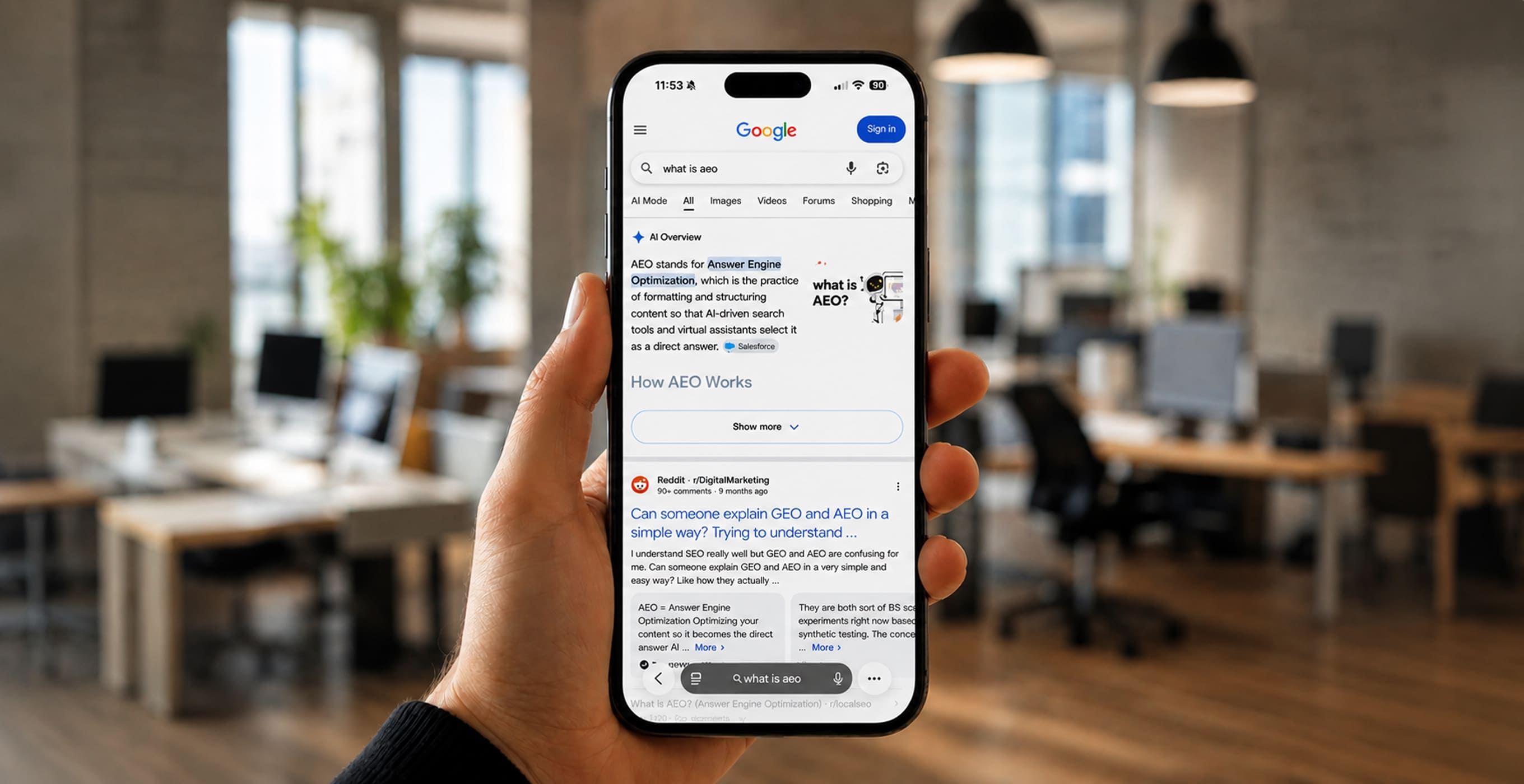
When you search for a service on your phone today, you rarely get directed straight to a company website. Instead, Google drops a big, grey box at the very top of your screen. That box summarizes the answer for you, quotes a few details, and saves you the trouble of clicking anything at all.
In the marketing world, we call this the zero-click search. According to research from SparkToro's Zero-Click Search Study, out of every 1,000 Google searches, only 360 result in a visit to an independent website. The remaining 640 searches stay locked inside Google's own yard.
When Google displays one of these automated summaries, the top-ranking website loses roughly 58% of its normal visitors, according to clickstream tracking by Ahrefs. The search engine handles the question directly, which means fewer people ever land on your homepage.
To stay visible today, you need to understand three separate terms that govern how people discover businesses online.
Traditional SEO (Search Engine Optimization)
Classic SEO is all about getting your website listed on Google's traditional results page. For decades, the goal was ranking among the standard search results, getting as close to spot number one as possible so people would click through to your pages. It depends heavily on keyword placement, technical website setup, and links pointing back to your domain.
AEO (Answer Engine Optimization)
Answer Engine Optimization is the practice of formatting your text so search engines can lift a direct answer straight onto the screen. This powers Google's featured snippets and voice assistants like Siri. Instead of trying to win a website click, you write short, direct answers to specific customer questions. The search engine grabs your paragraph, displays it prominently, and credits your brand as the source.
GEO (Generative Engine Optimization)
Generative Engine Optimization is the newest shift, it's the process of structuring your company information so AI tools like ChatGPT and Perplexity recommend you when potential clients ask conversational questions.
Think of it like this:
- Traditional SEO gets your name listed in the phone directory.
- AEO gets your phone number read aloud by the operator.
- GEO gets the operator to tell the caller: "Here is the exact company you should hire, and here is why".
Why You Should Care About This Shift
The problem is straightforward: your potential clients are changing how they look for help.
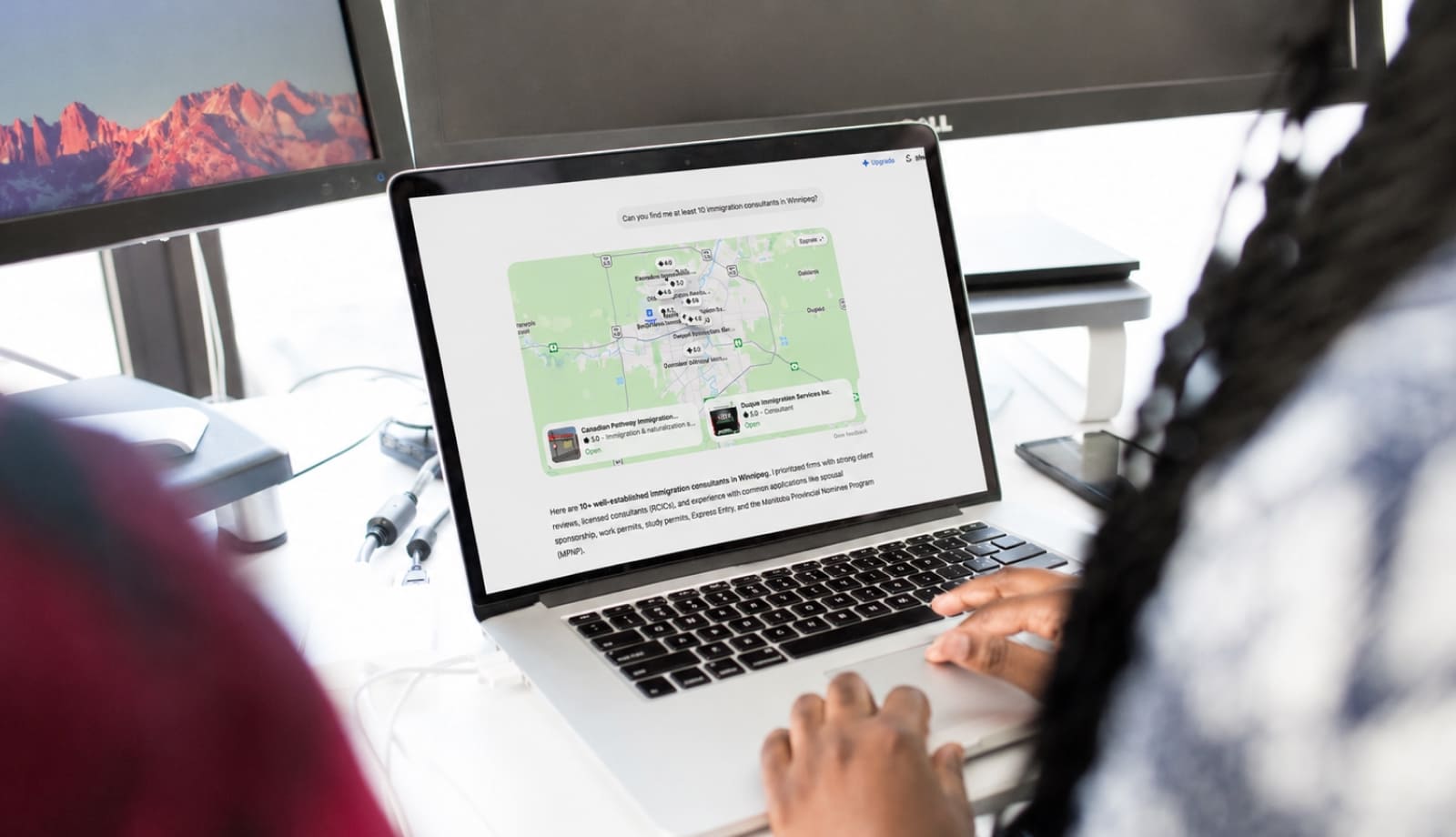
According to an industry study published in Search Engine Land, 37% of consumers now begin their research inside conversational AI tools rather than typing short keywords into a standard search bar. They do not type "Winnipeg accountant" anymore. They type: "I am launching a bakery in the Exchange District with four staff members. Who should I hire to set up my corporate tax structure?"
When an AI engine answers that question, it does not show ten pages of options. It reads across the web, evaluates company reputations, and picks two or three specific firms to recommend. If your business is not one of those named recommendations, you will never even know that prospect was shopping around.
The 60-Second ChatGPT Test
You can test where your business stands right now. Open ChatGPT and type this simple question:
"Who are the top three [your exact service] in [your city] for [your target client type], and why should someone hire them?"
Look closely at the output:
- Did it mention your business at all?
- If it named your company, did it describe your actual services accurately, or did it pull outdated details from five years ago?
- If it skipped you, which local competitors did it name instead?
If your business did not appear, do not worry. Most local businesses have not optimized for this shift yet, which gives you a major opportunity to claim that space first.
In our next article, we will share the exact four-prompt diagnostic test you can use to see everything AI tools are currently saying about your company behind the scenes.
Explore more blogs